



Pure Hydrolysed Collagen
200g, 500g, 650g


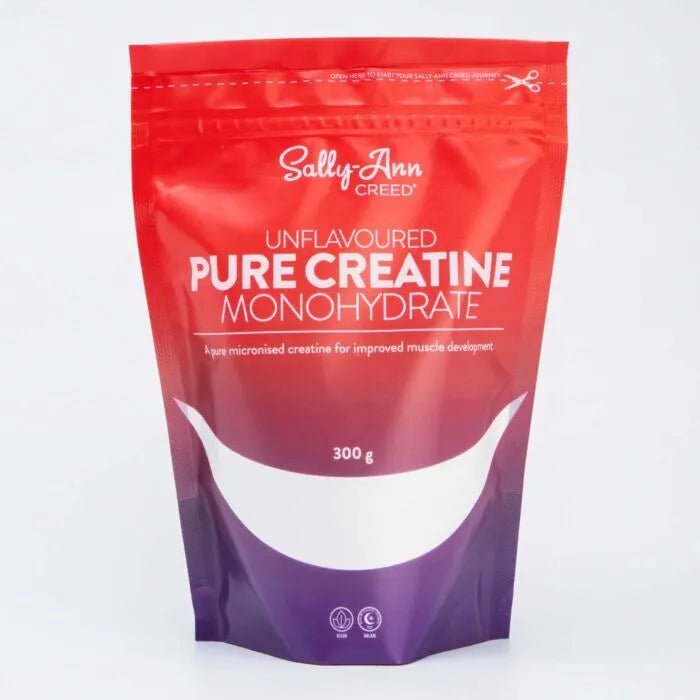
Creatine Monohydrate 300g


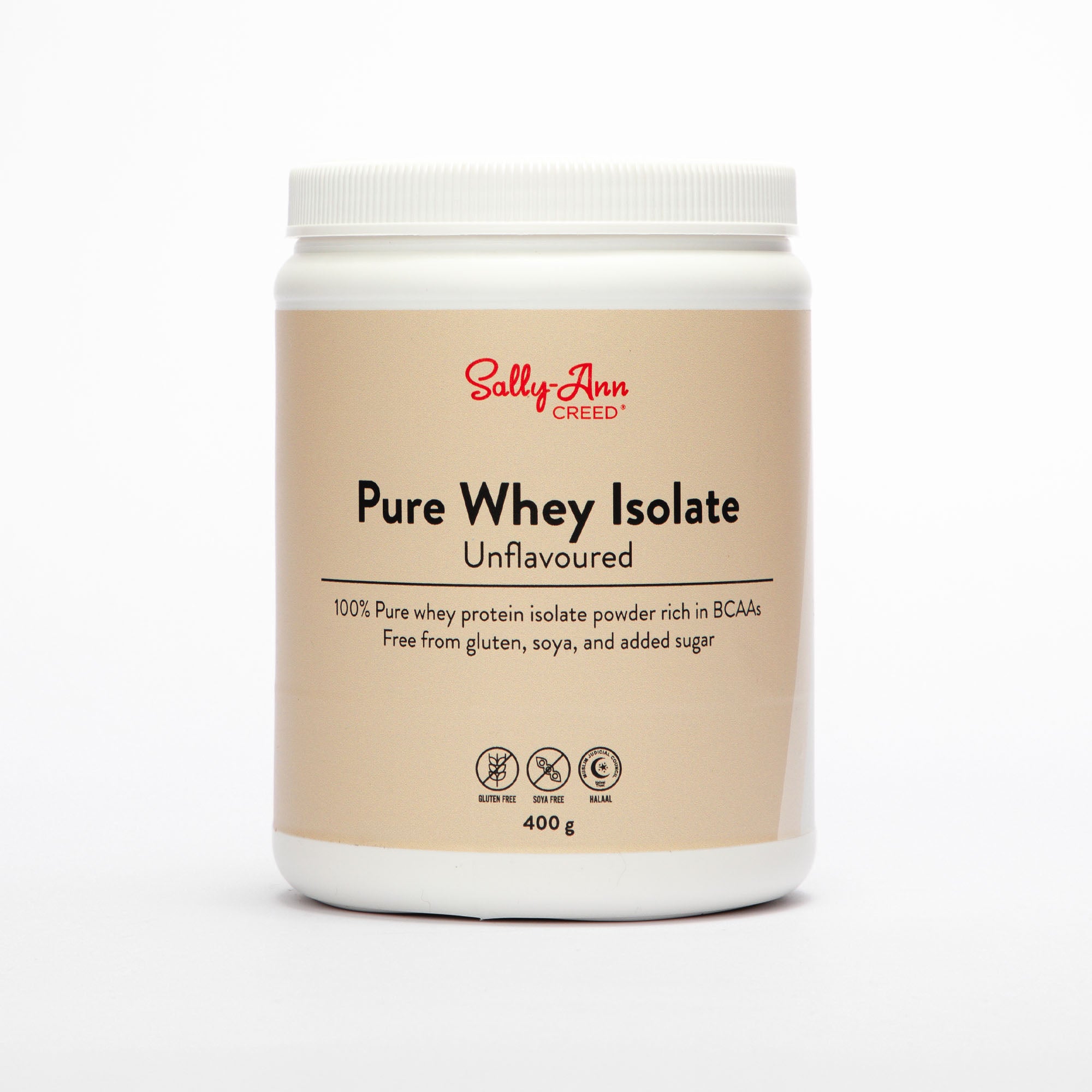

400g Pure Whey Isolate (Unflavoured)


1kg Creed Whey Isolate (Unflavoured)


400g Chocolate Whey Isolate


1kg Creed Whey Isolate (Chocolate)


Over 2,000 happy customers
Lisa Chalmers
I recently travelled abroad and opted not to take any collagen with me, being cautious of white powder causing any suspicion. Not taking collagen resulted in the pain in my joints (specifically in my feet and hands) returning within a week which was painful and very uncomfortable.
Upon returning home, I doubled my collagen dose for the first week before resuming my usual dosage and am very pleased to report that the pain has completely disappeared.

Debbie Neethling
I have been on Sally Anne's Collagen on and off for 2 years. Every time I go off I can feel a major difference in my joints (start aching), skin and hormones (irregular periods). I have recently been taking Sally Anne's Milk Thistle Premium and Vit D. This is definitely a brand I trust and adore.
KH
With all of these positive change happening in my body, it has made me so aware of what I put into my body because I have seen first hand, how detrimental artificial ingredients can be to my health. Words cannot even describe the drastic changes that have been occurring within me and within my life because of this new lifestyle, and I cannot thank you enough.

Jill Wiliams
I have been using Sally Ann products for a number of years now and I would not be without them. Last year we travelled to Australia and forgot my collagen at home. I noticed a big difference in my nails by the time I got home. I will NEVER do that again.

Level up your health with these products


Juls Meintjes
Juls is a certified kettlebell instructor and fitness leader. With a passion for healthy living and an unwavering commitment to leading by example, Juls has inspired countless women to adopt a more active lifestyle and prioritise their physical and mental wellbeing.
Juls loves our collagen because it allows her to keep her body strong and healthy.

Yaw Penxe
Yaw Osei Penxe heralds from Queenstown, and is a dynamic winger who plays for the Sharks. Rising through the Eastern Province Kings academy, he represented Border at Craven Week and joined the Springboks squad in 2021.
Yaw uses our Creatine Monohydrate, Pure Whey Isolate and Hydrolysed Chicken Collagen to help with his joints and ligaments, ensuring he’s able to train and perform at his peak.
Stay healthy, Stay up to date

Why we redesigned NeuroBoost
While our original NeuroBoost worked well for many, we saw an opportunity to refine the formula as science improved. Here’s why we updated one of our favourite products, and how the new ingredients offer clearer focus and better stress balance.
Read more
Collagen or Whey Protein?
One of the most common questions we get is: "Should I be taking collagen or whey?" It is a lovely question, and one we love to help with! The short answer? These two proteins are so different from each other that comparing them is a bit like comparing a hammer to a screwdriver. Both are wonderful tools. They just do very different jobs. Yes, both whey and collagen are proteins. But that is really where the similarity ends. They are made of completely different building blocks, they support different tissues, and they offer very different benefits. By the end, you will know which one is right for what you are trying to achieve. Or, as we often suggest, whether both might belong in your daily routine. Whey protein Whey protein has been a staple in the world of nutrition for decades. It has been a natural byproduct of cheese-making for thousands of years. If you have ever seen the watery liquid that separates from curdled milk when making yoghurt or cheese, that liquid is whey. For most of history, it was thrown away or used for livestock feed. It was only in the last few decades that its incredible nutritional profile was properly recognised, and it became the staple of fitness and nutrition it is today. A few fun facts about whey: Whey protein is a complete protein, meaning it contains all 9 essential amino acids (the ones your body cannot make on its own). It is particularly rich in branched-chain amino acids (BCAAs): valine, leucine, and isoleucine, which are involved in muscle repair and growth. Leucine, one of the major amino acids, is able to stimulate muscle protein synthesis, which is why whey is so linked with muscle building. Whey comes in different forms. Whey Protein Concentrate is around 70 to 80% protein and contains some lactose and fat. Whey Protein Isolate is around 90% protein, with fat, lactose, and sugars filtered out through advanced processing. At Sally-Ann Creed®, we only stock Whey Protein Isolate, because we want you to get the highest quality protein source without any unnecessary extras. If lactose is an issue for you, or you are simply looking for the cleanest option, isolate is your friend. Collagen Here is a lovely fact most people do not know. Collagen is actually the most abundant protein in your body. It makes up roughly 30% of your total body protein, right now. It is the structural scaffolding that holds your skin together, cushions your joints, strengthens your bones, and gives shape to your tendons, ligaments, hair, and nails. Your body makes its own collagen all the time. But from around your mid-twenties, this natural production begins to slow. By your fifties, you may be producing significantly less collagen than you did in your twenties. This is one of the reasons skin, joints, and hair often start to feel different as we age. A few fun facts about collagen: Collagen is typically extracted from bovine (cow), marine (fish), or chicken sources. It is not a complete protein and does not contain all 9 essential amino acids. It is naturally very high in three amino acids: glycine, proline, and hydroxyproline. These are the building blocks of connective tissue. Collagen supplements are typically hydrolysed, meaning the protein has been broken down into smaller pieces called peptides, which are easier for the body to absorb. Whey vs collagen at a glance A quick side-by-side, so you can see the differences at a glance: Feature Whey Protein Collagen Made from Milk (whey portion of cheese-making) Bovine, marine, or chicken sources Complete protein? Yes, all 9 essential amino acids No, missing tryptophan amino acid Key amino acids BCAAs, especially leucine Glycine, proline, and hydroxyproline Main role Building and repairing muscle Structural support (skin, joints, bones) Best for Muscle support, preventing age-related muscle loss, balancing meals Skin, joints, hair, nails, connective tissue When to take Post-workout or as a meal protein top-up Any time, often with coffee in the morning The amino acid difference If you want to see just how different these two proteins really are, have a look at the building blocks or amino acids. This chart shows the amino acid content of both proteins, side by side, in grams per 100g of protein. Whey's main pro is leucine. Whey contains around 3.6 times more leucine than collagen. Leucine is the amino acid uniquely responsible for triggering muscle protein synthesis, which is why whey is the tool for muscle building. Collagen's pros are glycine, proline, and hydroxyproline. Together these three amino acids make up nearly half of collagen's entire structure. They are the building blocks of the connective tissue that keeps your skin, joints, and bones strong. Collagen contains no tryptophan. This is one of the 9 essential amino acids, which is why collagen is technically an incomplete protein. Hydroxyproline is unique to collagen. It is barely found anywhere else in nature. Which is why nothing else quite does what collagen does for connective tissue. Which should you choose? Choose whey if: You are looking to build or preserve muscle You are training regularly, especially strength training You are over 50 and want to protect against age-related muscle loss (sarcopenia) You are looking for a high-protein snack or breakfast supplement You want a complete protein that fills nutritional gaps Choose collagen if: You are focused on skin health, elasticity, or hydration You are supporting joint comfort or connective tissue recovery You want to support hair, nail, and gut lining health You are over 25 and want to top up what your body is starting to produce less of Choose both if: You want the full broad benefit of muscle support, connective tissue support, as well as hair, skin, and nails support. Nothing about these two proteins competes or conflicts—they complement each other. Whey protein and collagen are two very different proteins, doing two very different jobs. Framing them as rivals misses the point. They are not competitors. They are complements. At Sally-Ann Creed®, we offer both because we believe both matter. Our whey protein isolate for the muscle-building, complete-protein side of the equation. Our collagen for the skin, joint, hair, and connective tissue side. Explore our range: ♥ Pure Whey Protein Isolate → ♥ Pure Collagen Peptides → If you have any questions or want to learn more, please contact our dietitian at dietitian@sallyanncreed.co.za ♥ This article is for educational purposes only and is not intended to diagnose, treat, or replace medical advice. If you have any concerns about protein intake, are managing a medical condition, or are pregnant or breastfeeding, please consult a qualified healthcare practitioner before starting any new supplement.
Read more
Gut health basics 101
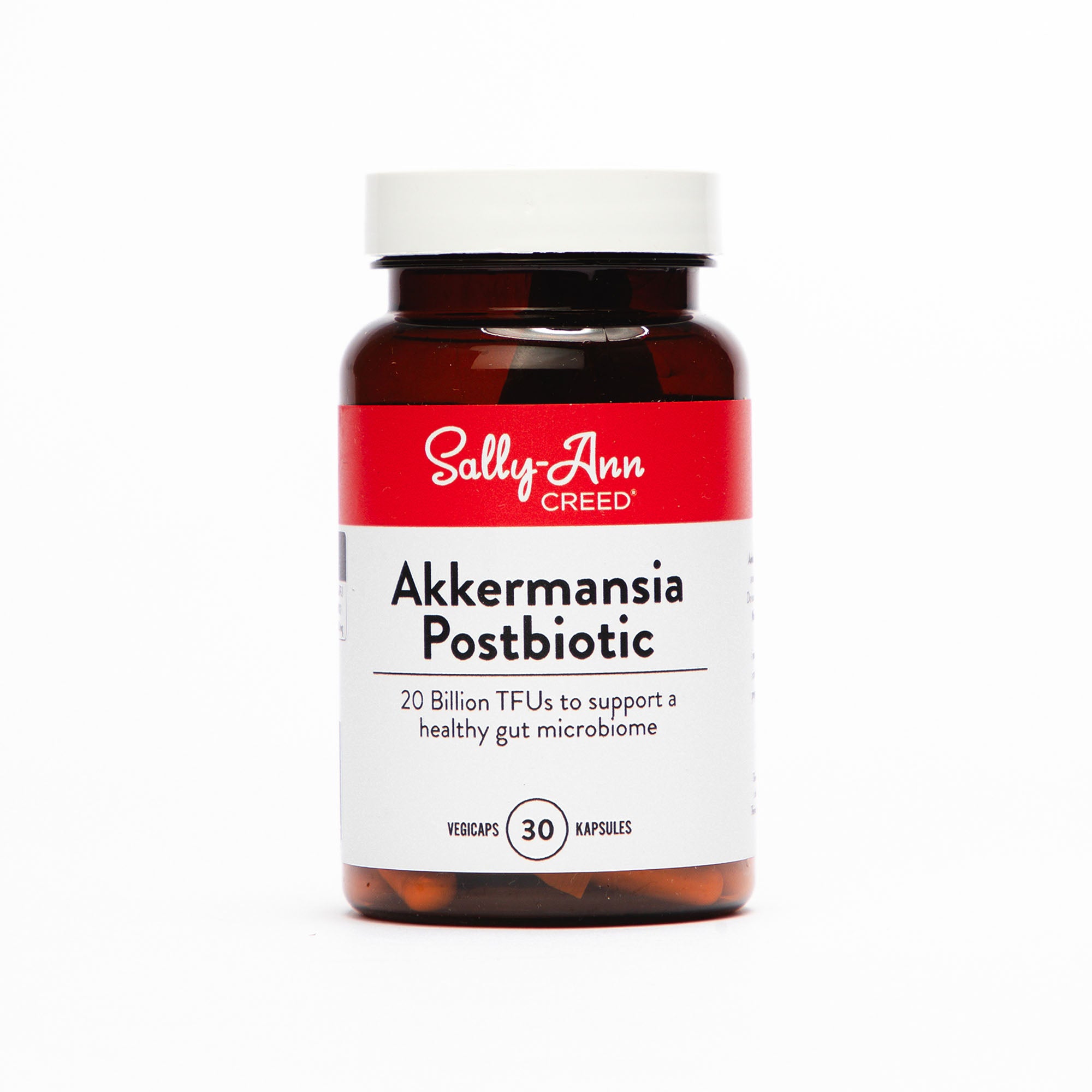
"Gut health" is one of those phrases we hear everywhere these days. On social media, in wellness magazines, from friends, from doctors, and, we suspect, from anyone who has recently started drinking kefir. It has become one of the most talked-about topics in nutrition, and yet, if we are honest, most of us still could not confidently explain what "the gut" actually is, or what a "microbiome" really does, or what the difference is between a prebiotic and a probiotic. If any of that sounds familiar, this blog is for you. We would love to walk you through the basics of gut health without any jargon we do not explain first. By the end, you will have a proper map in your head of what your gut is, what lives inside it, and why so much of your health, from digestion to immunity to mood, is being shaped by what is happening in there. The structure Your digestive system is the long, beautifully organised passageway that food travels through, from the moment you take a bite until the moment your body says goodbye to whatever is left. It stretches for several metres through the body, which is quite surprising given that all of it is neatly tucked into your torso! Technically, the "gut" can refer to the whole gastrointestinal tract, from mouth to bottom. In fact, a 2026 international expert consensus defined gut health as "a state of normal gastrointestinal function without active gastrointestinal disease and gut-related symptoms that affect quality of life." When people talk about "gut health" in everyday conversation, however, much of the attention tends to centre around the intestines and the gut microbiome, most of which is concentrated in the large intestine. The microorganisms Inside you, right now, there are trillions of microorganisms. Bacteria, yes, but also viruses, fungi, and other tiny life forms. Most of them live in your large intestine. Together, they are called your microbiome, and they are one of the most extraordinary things about being human. ❤ Your gut microbes can weigh around 200g in total ❤ You carry around 38 trillion microbial cells in your body, comparable to the number of your own human cells ❤ The genes inside your microbiome outnumber your own genetic code by around 150 to one ❤ Every person's microbiome is entirely unique. Even identical twins have different microbiomes These little tenants do far more than digest food. They make certain vitamins for you (like vitamin K and some B vitamins), they train your immune system, they produce compounds that talk to your brain, they help maintain the lining of your gut, and they ferment fibre into substances that keep the whole system healthy. Which is why the phrase "trust your gut" turns out to be much more literal than we ever realised. A little glossary of the words you might keep hearing Microbiome and microbiota Almost interchangeable, though technically slightly different. The microbiota refers to all the microbes themselves. The microbiome refers to the microbes plus their genetic material and everything they produce. In everyday conversation, both are used to mean roughly the same thing. Probiotics Live beneficial microbes that, when consumed in adequate amounts, can be helpful to your health. Found naturally in fermented foods like yoghurt, kefir, sauerkraut, kimchi and miso. Also available as supplements. Prebiotics The food that your gut microbes love to eat. Prebiotics are types of fibre and plant compounds that we cannot digest, but our microbes can. Found in foods like onions, garlic, leeks, asparagus, oats, bananas and legumes. Postbiotics This can have two meanings. Postbiotics are inactivated microorganisms and/or their components or compounds produced by the microorganisms that have been shown to provide a health benefit. Unlike probiotics, the microorganisms themselves are no longer alive. This is the category that pasteurised or inactivated beneficial microorganisms can fall into eg Sally-Ann Creed® Akkermansia Postbiotic. Synbiotics Any product or food that contains both prebiotics and probiotics together. The idea is that you provide both the beneficial microbes and the food they need to thrive. Fermentation The process by which microbes break down carbohydrates in the absence of oxygen. It happens in your gut every day, and it also happens in the making of sourdough, yoghurt, wine, beer, kimchi and sauerkraut. Short-chain fatty acids (SCFAs) The beneficial compounds your gut microbes produce when they ferment fibre. Butyrate is the most famous one and is the preferred fuel source of the cells lining your colon. SCFAs are one of the main reasons fibre is so wonderful for you. Intestinal permeability The scientific term for how easily substances pass through the lining of your gut. A small amount of permeability is normal and necessary. When it becomes excessive, some researchers refer to it colloquially as a "leaky gut", though this is still an actively researched area rather than a formal medical diagnosis. Dysbiosis An imbalance in the microbial community, either too few of the helpful microbes, too many of the less helpful ones, or a loss of overall diversity. Dysbiosis is linked with a wide range of conditions from digestive discomfort to skin issues. Gut-brain axis The two-way communication system between your gut and your brain, largely via the vagus nerve, plus a network of hormones and immune signals. This is why your emotions can affect your digestion, and why what happens in your gut can affect your mood. The vagus nerve A long cranial nerve that connects your brain directly to your gut (and to most of your other organs). It is one of the main highways along which your gut and brain communicate. Why any of this actually matters The reason gut health has become such a huge topic is because researchers keep discovering that the gut influences so much more than digestion. Immunity. A significant proportion of your immune system resides in tissue lining your gut, sometimes referred to as gut-associated lymphoid tissue (GALT). A well-supported gut microbiome helps train and regulate your immune response. Mood and mental health. The gut and brain communicate continuously through what we now call the gut-brain axis, involving the vagus nerve, immune signals, hormones and microbial metabolites. Interestingly, most of the body's serotonin is produced in the gastrointestinal tract, although this serotonin does not directly cross into the brain. Researchers are continuing to investigate how the microbiome may influence mood, stress and mental health through these interconnected pathways. Skin. Researchers are increasingly studying connections between the gut microbiome and inflammatory skin conditions such as acne, eczema and rosacea, an emerging area sometimes called the gut-skin axis. Hormones. Certain gut microbes help metabolise oestrogen, which means gut health may play a subtle role in hormone balance, particularly for women. Weight and metabolism. Emerging research suggests the microbiome influences how we extract energy from food, how full we feel after meals, and even our tendency to store fat. Sleep and energy. Sleep and the gut microbiome also appear to have a two-way relationship. Studies have found associations between sleep patterns and differences in gut microbial communities. Small, everyday ways to support your gut The most powerful things you can do for your gut are almost embarrassingly simple. Eat more plants, and eat more different plants. Diversity of plants supports diversity of microbes. Include some fermented foods. A spoonful of sauerkraut with a meal, a small glass of kefir in the morning, or a serving of plain live yoghurt with breakfast can all help. Feed the microbes with fibre. Prebiotic fibres from oats, legumes, onions, garlic, leeks and slightly underripe bananas are especially useful. Cut back on ultra-processed foods. Highly processed foods tend to be low in fibre and high in additives that some research suggests can disrupt the microbiome. Sleep and move. Both regular sleep and regular movement have been shown to positively influence the microbiome. Be careful with unnecessary antibiotics. Antibiotics can be life-saving when needed, but they also disrupt the microbiome significantly. If you need them, they are worth taking. If you can avoid unnecessary ones, that helps. Manage stress. Chronic stress genuinely affects gut function and microbial balance. Anything that supports your nervous system, like breathwork, time in nature, or good sleep, also supports your gut. A little something from us Because we love this topic so much, we have put together a range of gut-supporting supplements: a probiotic (live beneficial microbes), a prebiotic (the fibre that feeds them), and a postbiotic (an inactive form of a beneficial bacterium). Each one supports a different part of the same beautiful ecosystem, and they can be used on their own or together depending on what your gut needs. Explore our range: ❤ Prebiotic (Maxifos Prebiotic Powder) → ❤ Probiotic (Maxibiotic 20) → ❤ Postbiotic (Akkermansia Postbiotic) → If you have any questions or want to learn more, please contact our dietitian at dietitian@sallyanncreed.co.za ❤ This article is for educational purposes only and is not intended to diagnose, treat or replace medical advice. If you have any concerns about your gut health or are managing a digestive condition, please consult a qualified healthcare practitioner before making significant changes to your diet or supplement routine. References 1. Marco ML, Cunningham M, Bischoff SC, et al. The International Scientific Association for Probiotics and Prebiotics (ISAPP) consensus statement on the definition and scope of gut health. Nature Reviews Gastroenterology & Hepatology. 2026;23:432–448. 2. Salminen S, Collado MC, Endo A, et al. The International Scientific Association for Probiotics and Prebiotics (ISAPP) consensus statement on the definition and scope of postbiotics. Nature Reviews Gastroenterology & Hepatology. 2021;18:649–667. 3. Marco ML, Sanders ME, Gänzle M, et al. The International Scientific Association for Probiotics and Prebiotics (ISAPP) consensus statement on fermented foods. Nature Reviews Gastroenterology & Hepatology. 2021;18:196–208. 4. Ross FC, Patangia D, Grimaud G, et al. The interplay between diet and the gut microbiome: implications for health and disease. Nature Reviews Microbiology. 2024;22:671–686. 5. Loh JS, Mak WQ, Tan LKS, et al. Microbiota-gut-brain axis and its therapeutic applications in neurodegenerative diseases. Signal Transduction and Targeted Therapy. 2024;9:37.
Read more
The story of AI
Have you noticed that "AI" seems to have appeared everywhere? It is on our phones, in our search results, even being used in some of the tools we use for work. Depending on who you ask, it is either the greatest invention since the internet, or the beginning of the end. We don't think either is quite true. We thought it might be nice to write a blog on what AI is and without any hype and without any doom. Where AI came from and how it actually works. What is AI? Artificial intelligence, or AI, refers to computer systems that are designed to perform tasks that would normally be associated with "human intelligence" such as recognising speech, translating languages, solving problems or generating text. Chances are, you've already been using AI for years without even realising it. When your phone predicts the next word you're typing When Netflix recommends a programme When Google Maps reroutes you around traffic When your email filters out spam, that's all AI The type of AI that has become famous over the past few years is called a Large Language Model (LLM). Instead of memorising answers like a giant encyclopaedia, these models learn patterns from enormous amounts of text, including books, websites, scientific papers and publicly available information. When you ask a question, they use those patterns to generate what they predict is the most helpful response. But that is all it is. This is one of the most important things to understand about AI. It doesn't think the way you do or felt pain or ever been hungry. It doesn't know who you are unless you tell it. It generates responses based on patterns it has learned. And that's why AI can be incredibly helpful, but it also should never replace your own judgement or the advice from a qualified healthcare practitioner. A short history 1950 The mathematician Alan Turing published a paper called "Computing Machinery and Intelligence", which asked the now-famous question, "Can machines think?". He proposed what became known as the Turing Test: if a person could not tell whether they were talking to a human or a machine, the machine could be said to be intelligent. This paper is considered the beginning of AI as a serious idea. 1966 A researcher at MIT called Joseph Weizenbaum created ELIZA, one of the first chatbots. It mimicked a psychotherapist by rephrasing whatever you said back to you as a question. If you typed: "I'm feeling anxious today." ELIZA might reply "Why do you think you're feeling anxious?". It was simple, and yet people using it began to open up to it as if it were a real person. Weizenbaum was reportedly unsettled by how easily humans formed emotional bonds with a machine. Nearly sixty years later, we are seeing exactly the same thing with modern AI chatbots. 1997 When the computer beats the chess champion. IBM's chess-playing computer Deep Blue defeated the reigning world champion Garry Kasparov. For many people, this was the moment they realised computers could outperform humans in tasks once thought to require uniquely human intelligence. 2017 A group of Google researchers published a paper called "Attention Is All You Need", which introduced a new AI architecture called the transformer. Instead of reading one word after another like older computer systems, transformers learnt to understand the relationships between all the words in a sentence at the same time and today, almost every modern AI chatbot including ChatGPT, Claude, Gemini and Microsoft Copilot is built using this breakthrough. 2022 On 30 November 2022, OpenAI released a chatbot called ChatGPT. Within five days, it reached one million users. Within two months, it had reached 100 million users, making it the fastest-growing consumer application in history at the time. To put that into perspective, we researched that Instagram took around two and a half years to reach the same number. By early 2026, ChatGPT had grown to around 900 million weekly active users, showing just how rapidly AI has become part of everyday life. What are people actually using AI for? If you are new to AI these are some examples that it is being used for: Summarising a long document into three bullet points Helping a child understand tricky maths homework Suggesting recipe ideas for whatever is left in the fridge Translating a menu on holiday Preparing questions to ask a doctor before an appointment Explaining a medical or scientific term in plain language Brainstorming a birthday present Here are a few real examples we tried, to give you a sense of what that looks like in practice. An everyday example, turning what you have in the fridge into three dinner ideas in seconds. A learning example, using AI to make a tricky word easier to picture. For example, you could ask AI to explain what fibre is or summarise a scientific paper on vitamin D. But if you ask whether you need vitamin D, that's a question that still requires your medical history, blood tests and advice from your healthcare professional. The exciting bit and the slightly worrying bit One of the reasons AI feels so remarkable is that it can appear to "understand" us. You can ask it to explain a blood test, rewrite a difficult email, plan a week's meals or even help you understand a research paper. Often, the answers sound thoughtful, confident and surprisingly human. But there is something important to remember. AI is designed to produce the most likely answer based on patterns in the information it has learned from. It does not independently verify every fact before it responds, and it can occasionally produce information that is inaccurate or outdated while sounding completely convincing. This is sometimes called an AI hallucination. For example it might invent a paper that doesn't exist or give a wrong date for an event. It is one of the reasons we always recommend checking important medical, legal or financial information with trusted sources. Will AI replace us? If history can tell us anything is that technology, rather than eliminating jobs, usually changes them. Calculators did not replace mathematicians. GPS did not replace pilots. The internet didn't replace teachers. Instead, they changed how people worked. The same is likely to happen with AI. Many repetitive tasks may become faster, allowing professionals to spend more time doing the things that require human judgement, empathy, creativity and experience. Which AI should you use? You may have heard names like ChatGPT, Claude, Gemini and Copilot. Our IT colleague explained it to us that the different types are like different makes of cars. ChatGPT (OpenAI) is for everyday questions, writing, brainstorming ideas, learning new topics, explaining complex concepts and coding. It is one of the most widely used AI assistants in the world. Claude (Anthropic) is known for writing and working with long documents. Many people enjoy using Claude for reports, creative writing and detailed analysis. Gemini (Google) is Google's AI assistant that works closely with Gmail, Google Docs and other Google services. It is particularly useful for people already using Google. Microsoft Copilot is built into Microsoft Word, Excel, Outlook and Teams. Copilot is designed to improve productivity by helping users draft documents, analyse spreadsheets and summarise meetings. Our thoughts AI isn't magic, it isn't alive and it is not perfect. But it could be one of the most important tools humanity has ever built. Like the internet before it, it will almost certainly change the way we learn, work and solve problems. Use it to learn. Use it to save time. Use it to explore ideas. But for important decisions, especially those involving your health, keep asking questions, keep thinking critically and keep speaking to trusted professionals. Technology will continue to evolve.Human judgement will always matter. If you have any questions or want to learn more, please contact our team at admin@sallyanncreed.co.za ❤ This article is for educational purposes only and is not intended to diagnose, treat or replace medical, legal or financial advice. AI tools can be a useful starting point for learning, but important decisions, especially those relating to your health, should always be discussed with a qualified professional.
Read more
The many faces of sugar
Understanding the family of carbohydrates behind your everyday food If you have already read our piece on sugar metabolism →, you will know how a mouthful of food travels through the body and becomes energy. Sugar is not a single substance, it is a whole family of carbohydrates, some naturally in fruit and dairy, some added to processed foods, some hidden inside grains and vegetables, some tied up in fibre. Each type behaves a little differently once inside your body. Some rush in quickly, others drift in slowly and some are not digested at all. This blog is here for you to understand sugars a little better, and without a single wagging finger. Meet the family When we say "sugar", we are really talking about a family of carbohydrates. They differ in size, meaning how many sugar units are joined together, and that changes how they are digested, absorbed and used for energy. There are three broad groups. Monosaccharides: single sugars These are the simplest sugars. One unit only, small enough to be absorbed straight into your bloodstream without further digestion. Glucose: the sugar your body ultimately uses for fuel. Most carbohydrates end up as glucose after digestion. Found in small amounts in honey and fruit. Fructose: the natural sugar in fruit and honey. Handled a little differently by the body, taking a detour through the liver before it can be used. Galactose: usually found alongside glucose in lactose (milk sugar). Disaccharides: pairs of sugars Two monosaccharides linked together. Your body needs to snip them apart before they can be absorbed. Sucrose = glucose + fructose. This is table sugar, and what you will find in sweetened drinks, sauces, biscuits and most sweet treats. Lactose = glucose + galactose. The natural sugar in milk, yoghurt and cheeses. Maltose = glucose + glucose. Forms during starch breakdown, and shows up in malted products, some cereals and beers. Polysaccharides: long chains of sugars Many sugar units linked together in long chains. Some of them we digest, and some of them we do not, which is where things get really interesting. Starch: the storage form of glucose in plants. Found in grains, potatoes, maize, rice, oats and legumes. Digested into glucose over time. Glycogen: the storage form of glucose in animals and humans. Held in the liver and muscles as a back up energy reserve. Fibre: long chains of sugars that we do not digest at all. Fibre is technically a polysaccharide, but its magic is that we cannot digest it. Which sounds like a failure until you understand what it actually does inside us. Soluble fibre forms a soft gel in your gut. It slows digestion, feeds your gut microbes, and helps flatten the rise in blood sugar after a meal. Found in oats, psyllium, and the pectin in apples and citrus. Insoluble fibre adds bulk to your stool and keeps things moving nicely. Found in wheat bran and vegetable skins. Resistant starch is a special kind of starch that behaves like fibre. It resists digestion in the small intestine, then arrives in your large intestine to feed your gut microbes. Found in slightly underripe bananas, legumes, and in rice or potatoes that have been cooked and then cooled. Fibre and resistant starch slow glucose absorption, feed your microbes, and help you feel full for longer. Why the packaging matters Here is one of the most important and exciting ideas in modern nutrition. The same sugar can behave completely differently depending on the "packaging" it comes in. Take an apple. It contains fructose and glucose, roughly the same sugars you would find in a fizzy drink. But when you eat an apple, those sugars are locked inside the fruit's cell walls. They are surrounded by fibre, water, vitamins and antioxidants. The sugars moves out slowly as your body breaks the fruit down. Your blood sugar rises gently. Your body handles it much easier. Now take the same apple, blend it into juice and strain out the fibre. Suddenly the same sugars are free, unbound and ready to hit your bloodstream almost immediately. The cell walls are gone. The fibre is gone. The fruit is gone, in a sense. This concept is called the food matrix, and it is why nutrition scientists increasingly say that how the food is structured is also very important along side what a food contains. An apple is not the same as apple juice. A whole grain is not the same as refined flour. The sugars may look similar on paper, but the packaging is completely different, and your body responds accordingly. What this means for your plate Once you understand the family of sugars and the power of the food matrix, here are a few practical takeaways. Whole fruit is not the same as fruit juice. Enjoy your fruit whole, with the skin where possible. Save juice for occasional treats. Whole grains carry their own fibre. Oats, brown rice, wholewheat bread, quinoa and barley all release their sugars more slowly than their refined cousins. Choose them more often. Cooked-and-cooled starches. Cooking rice or potatoes and then cooling them (even briefly) creates resistant starch, which behaves more like fibre than glucose! Read labels for free sugars. Anything ending in "-ose" (sucrose, glucose, fructose, dextrose, maltose) is a form of sugar. So are syrups, honey, agave, and fruit juice concentrates. Give your fibre some love. Most South Africans eat far less fibre than recommended. Aim for 25 to 30 grams a day, from a variety of vegetables, legumes, whole grains, nuts, seeds and fruit. A note on the "healthy" sugars Our ethos at Sally-Ann Creed® is centred on education, not fearmongering. We do not want to promote restriction or label foods as "good" or "bad", or even simply "healthy" and "unhealthy". However, it is helpful to understand that some sugars marketed as more natural or healthier can still affect blood glucose in a similar way to ordinary table sugar. Honey, coconut sugar, maple syrup and agave may differ slightly in taste, processing and micronutrient content, but they are still sources of added sugar. This does not mean that you need to avoid them completely. It means that they are best enjoyed mindfully and in context, rather than assumed to have no effect on blood sugar. The graph below provides an example of this. This blood-glucose curve from one participant in a study compared the same amounts of honey and glucose. In this example, honey produced a lower glucose response than pure glucose (not table sugar), and both caused a considerable rise in blood glucose. As always if you have any questions or want to learn more, please contact our dietitian at dietitian@sallyanncreed.co.za ❤ This article is for educational purposes only and is not intended to diagnose, treat or replace medical advice. If you have any concerns about your blood sugar, metabolic health, or are managing a chronic condition such as diabetes, please consult a qualified healthcare practitioner before making significant changes to your diet, exercise routine or medication. References 1. Gonzalez JT. Are all sugars equal? Role of the food source in physiological responses to sugars with an emphasis on fruit and fruit juice. European Journal of Nutrition. 2024;63(5):1435–1451. 2. Capuano E, Janssen AEM. Food matrix and macronutrient digestion. Annual Review of Food Science and Technology. 2021;12:193–212. 3. Xiong K, Wang J, Kang T, Xu F, Ma A. Effects of resistant starch on glycaemic control: a systematic review and meta-analysis. British Journal of Nutrition. 2021;125(11):1260–1269. 4. Abdulrhman M, El Hefnawy M, Ali R, Abou El-Goud A. Honey and type 1 diabetes mellitus. In: Liu CP, editor. Type 1 Diabetes: Complications, Pathogenesis, and Alternative Treatments. IntechOpen; 2011.
Read more
Sugar metabolism
What your blood sugar has to do with your energy, your focus, and that afternoon crash There is a moment many of us know quite well. It is somewhere between 2 and 4 in the afternoon. Lunch was two hours ago, the emails are still coming in, and your brain, which was doing quite well earlier, seems to have slowed and clock out. Your eyelids feel heavy, your motivation dips. And almost without thinking, you find yourself walking towards the coffee machine, or the biscuit tin, or both. If this sounds familiar, welcome. You are not weak-willed. You could be riding a rollercoaster you never signed up for, and it has a name. Blood sugar. More precisely, the rise, the crash, and the rebound that happens inside you every time you eat. This blog is here to explain what is actually going on, why it matters more than most of us realise, and what you can do about it. A quick word on sugar itself Before we follow a mouthful of food on its journey, a very quick note. "Sugar" is not a single substance. It is a whole family of carbohydrates, some naturally in fruit and dairy, others added to processed foods, others hidden inside starches, others tied up in fibre. Each type behaves a little differently once inside your body. If you would like to understand the different types of sugar, where they come from and how they compare, we have written a companion piece: The many faces of sugar → For now, know this: whatever type of sugar or starch you eat, your body eventually breaks most of it down into one small molecule called glucose. And glucose is where the real story begins. So why should we care? Managing your blood sugar is one of the most powerful things you can do for your everyday wellbeing. Supporting healthy glucose regulation may help with appetite and everyday energy patterns and is an important part of long-term metabolic health. Every cell in your body needs a steady supply of fuel. Your brain is a demanding customer, and under usual circumstances glucose is its main source of fuel. When your glucose supply arrives in steady waves, your cells are happy! When it arrives in sudden peaks followed by dramatic troughs, your body has to work much harder to keep up. You have almost certainly felt this happening. The heavy-limbed feeling after a big pasta lunch. The mid-morning crash after a breakfast of just coffee and toast. The strange irritability that arrives when you have gone too long without eating. The journey of a mouthful of food To understand blood sugar properly, it helps to follow a mouthful of food on its actual journey through the body. Let us take a slice of wholegrain toast with a little honey, and follow it from your first bite to the moment its energy is put to work. More on step 6 Once inside your cells, glucose has three possible fates. First, it can be used immediately for energy. Your cells break glucose down further inside tiny power stations called mitochondria, producing ATP, the actual currency of energy in your body. Every heartbeat, every thought, every breath is powered by ATP. Second, it can be stored for later. Your liver and muscles store extra glucose in the form of glycogen, essentially the body's short-term battery, as it is held in reserve for when you need energy quickly. We use this in exercise for example, which is why many athletes choose to do carb-loading (which is when they consume a larger amount of carbs before a race) to maximize their glycogen storage. Third, if there is more glucose than your body needs right now, and your glycogen stores are already full, your liver converts the excess into fatty acids, which are then transported to your adipose (fat) tissue and stored for the long term. This is your body's natural way of "saving fuel" for if there is scarcity, an incredibly clever design that once kept our ancestors alive through winters, but which does not always serve us well in a world of constant, easy food. As insulin does its work, your blood sugar level gradually falls back towards where it started. In a well-functioning system, this happens gently, over a couple of hours. Your energy stays steady, your focus stays clear, and you feel neither jittery nor sleepy. Understanding your blood sugar is not about fear or restriction at all. It is about noticing the patterns in your own energy, your own hunger, your own focus, and making choices that support your body rather than fight against it. The rollercoaster is optional. Most of us are just riding it because no one told us there was another way. Now you hopefully know. What you can do to help this curve Build balanced plates. Combine carbohydrates with protein, fibre and healthy fats at every meal. Protein and fat slow down the release of glucose from the small intestine, so instead of a sharp peak you get a gentle wave. A slice of toast with butter and eggs is a very different glucose story from a slice of toast alone. Choose less refined carbohydrates more often. Sweet potato with the skin on. Brown rice or lentils rather than white rice. Wholegrain bread rather than white. These foods still give you carbohydrates, but they release the glucose slowly and steadily. Move after meals. A ten-minute walk after eating is actually a great tool for managing post-meal glucose. When your muscles contract during movement, they take up glucose from the blood directly, without needing as much insulin to do so. It does not have to be exercise. Even tidying the kitchen counts. Do not skip meals then overeat. For some people, long gaps followed by a large carbohydrate-rich meal may produce a greater post-meal glucose response. Regular, moderate meals keep the rollercoaster more steady. Eat your vegetables and protein first. There is a growing body of research showing that eating fibre and protein before the starchier carbohydrates within the same meal can reduce the glucose response to that meal. Sleep and stress matter. Some studies have actually shown that poor sleep and high stress can both raise blood sugar the next day. Protecting your rest and your nervous system is not separate from your metabolic health. As always if you have any questions or want to learn more, please contact our dietitian at dietitian@sallyanncreed.co.za ❤ This article is for educational purposes only and is not intended to diagnose, treat or replace medical advice. If you have any concerns about your blood sugar, metabolic health, or are managing a chronic condition such as diabetes, please consult a qualified healthcare practitioner before making significant changes to your diet, exercise routine or medication. References 1. Wyatt P, Berry SE, Finlayson G, et al. Postprandial glycaemic dips predict appetite and energy intake in healthy individuals. Nature Metabolism. 2021;3:523–529. 2. Berry SE, Valdes AM, Drew DA, et al. Human postprandial responses to food and potential for precision nutrition. Nature Medicine. 2020;26:964–973. 3. Engeroff T, Groneberg DA, Niederer D, et al. After dinner rest a while, after supper walk a mile? A systematic review with meta-analysis on the acute postprandial glycaemic response to exercise before and after meal ingestion in healthy subjects and patients with impaired glucose tolerance. Sports Medicine. 2023;53:849–869.
Read more
Our weekly newsletter is our pride and joy.
It’s filled with useful tips, informative articles, our favourite recipes, and updates on our products. We also offer early access to discounts, so keep an eye on your inbox.